Therapeutic indications · Algic syndromes

Algic syndromes: when the response to the set path is partial.

For the doctor who manages musculoskeletal, neuropathic or myofascial pain — in surgery, rehabilitation, dentistry — and evaluates a complementary, non-invasive and drug-free option. On this page: what exists, what has been studied, with what limits.

In practice

When the pain remains despite the path

In some patients the pain remains difficult to manage even with a correctly set path: drugs, physiotherapy, infiltrations. In chronic forms, and in those with a muscle-tensive or central sensitization component, the response is often partial.

When that happens, the remaining options have a cost — of tolerability, time, organisation — that the treatment plan has to absorb, and the core component of pain remains the most difficult to achieve.

It is in this space that it makes sense to consider a complementary – non-invasive option, applicable with standardised protocols and which can be integrated into the route without replacing it.

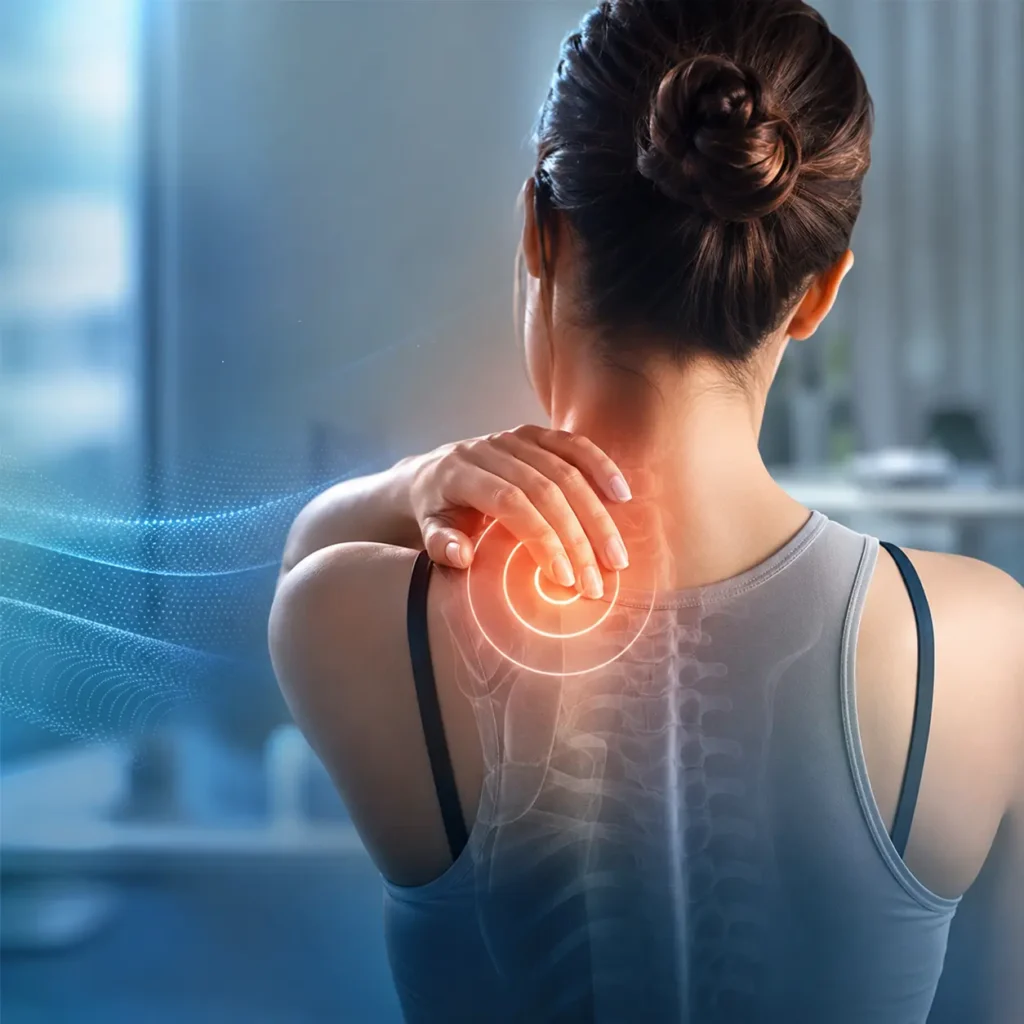
Person of shoulders carrying the hand to the neck, with graphic indication of the painful area

What exists

REAC® protocols for this area

For algic syndromes, REAC® Technology provides neuromodulation and biomodulation protocols, applied with the medical device BENE Mod 110. The scope, as defined in the technical documentation, includes acute or chronic pain of different origin: musculoskeletal, neuropathic, myofascial, localized or diffuse.

01

NPPO and NPPO-CB — neuromodulation

For algic syndromes with a muscle-tensive component: ear application with the handpiece probe (NPPO, seven pulses of 500 milliseconds) or surface on the cervicobrachial area (NPPO-CB, about four minutes), in cycles of 18 sessions. For doctors and dentists.

02

ANM — Antalgic Neuro Modulation

Surface application with the ACP electrode on the area to be treated, 15 minutes per session, in cycles of an average of 18 sessions. For local algic syndromes and for pictures of neuropathic pain and central sensitization. For doctors and dentists.

03

ACT, CO, MO — Biomodulation

Surface application on the area to be treated, 15 minutes per session (30 in IBZ variants). Aimed at the inflammatory, microcirculatory and metabolic components that can contribute to pain and edema. Reserved for doctors.

The treatment is painless, occurs on intact skin and, according to the technical documentation, there are no known contraindications to the concomitant use of pharmacological therapies.

What literature says

What has been studied

Eleven clinical publications by Rinaldi and Fontani (2010–2025) in which pain is a measured outcome are indexed on PubMed. These include: a sham-controlled study, a randomised single-blind versus placebo analysis in 888 subjects, before/after studies without control group, two comparisons with other therapies and case series. Here the main ones, with design and number.

Radioelectric Asymmetric Conveyer (REAC) Neuropostural Optimization (NPO) for Pain in Lipedema: A Sham-Controlled Study

Cureus · 2025

Retrospective, controlled with sham in the same session · 83 women with lipedema (stages 2–5) · NPO protocol · pain measured with VAS immediately after each procedure · monocentric, without follow-up.

View on PubMed →

Noninvasive radioelectric asymmetric brain stimulation in the treatment of stress-related pain and physical problems: psychometric evaluation in a randomized, single-blind placebo-controlled, naturalistic study

International Journal of General Medicine · 2011

Randomized, single-blind, placebo-controlled · 888 subjects · NPPO protocol, 4-week cycle · PSM-scale "pain and physical problems" cluster · same cohort as stress-related disorders studies.

View on PubMed →

REAC Neurobiological Modulation as a Precision Medicine Treatment for Fibromyalgia

Journal of Personalized Medicine · 2023

Before/after, without control group · 37 patients with fibromyalgia · one NPO session and one cycle of 18 NPPO sessions · functional dysmetry, Sit-to-Stand, Timed Up and Go, Fibromyalgia Impact Questionnaire (pain included).

View on PubMed → Read the summary in the News →

Neurobiological modulation with REAC technology: enhancing pain, depression, anxiety, stress, and quality of life in post-polio syndrome subjects

Scientific Reports · 2024

Before/after, without control group · 17 people with post-polio syndrome (average age 55) · NPO, NPPO and NPPO-CB protocols · pain, mood and quality of life scales.

View on PubMed →

The limits to know: the sham-controlled study is retrospective and measures only the immediate effect; the analysis of 888 subjects uses a self-administered scale; studies of fibromyalgia and post-polio syndrome have no control group; publications on biomodulation protocols in pain are case series and case reports.

Frequently Asked Questions

Before evaluating it: the most frequently asked questions

As a complementary, not a substitute, option: according to the technical documentation, no contraindications to the concomitant use of pharmacological therapies are known, and protocols can accompany physiotherapy and rehabilitation. Evaluation, selection of treatment and judgment on the results remain with the professional.

The technical documentation shall distinguish between: NPPO and NPPO-CB for algic syndromes with muscle-tensive component; ANM for local, neuropathic and central sensitization pain; ACT, CO and MO when they contribute inflammatory, microcirculatory or metabolic components. The choice is the doctor's, based on the clinical framework.

Sessions of a few seconds (NPPO) to 15-30 minutes (ANM, ACT, CO, MO), in cycles of an average of 18 sessions, with intervals of a minimum of one hour to a maximum of two weeks.

Treatment is contraindicated in established or suspected pregnancy, in carriers of pacemakers or other active implantable devices and in the presence of damaged skin in the area of application. The expected side effects reported in the technical documentation – in about one in ten patients – are, for neuromodulation protocols, nausea, headache, anxiety, restlessness, mood swings, asthenia and muscle soreness; for those of biomodulation, localized tenderness and asthenia. All in spontaneous regression.

A comparison with technical-scientific support to examine relevant protocols, technical documentation and publications, and understand how it fits into the workflow. The course includes initial training and ongoing assistance: Route and Support.

Regulatory note

The indications of use, contraindications and warnings of REAC® devices are only those indicated in the technical documentation and in the instructions for use, in accordance with the regulatory framework for medical devices. This page describes the areas of application documented, without constituting a promise of clinical outcome.

Do you want to evaluate REAC® protocols for pain in your setting?

Let's talk about it with technical and scientific support: an assessment, without obligation.

Request an evaluation